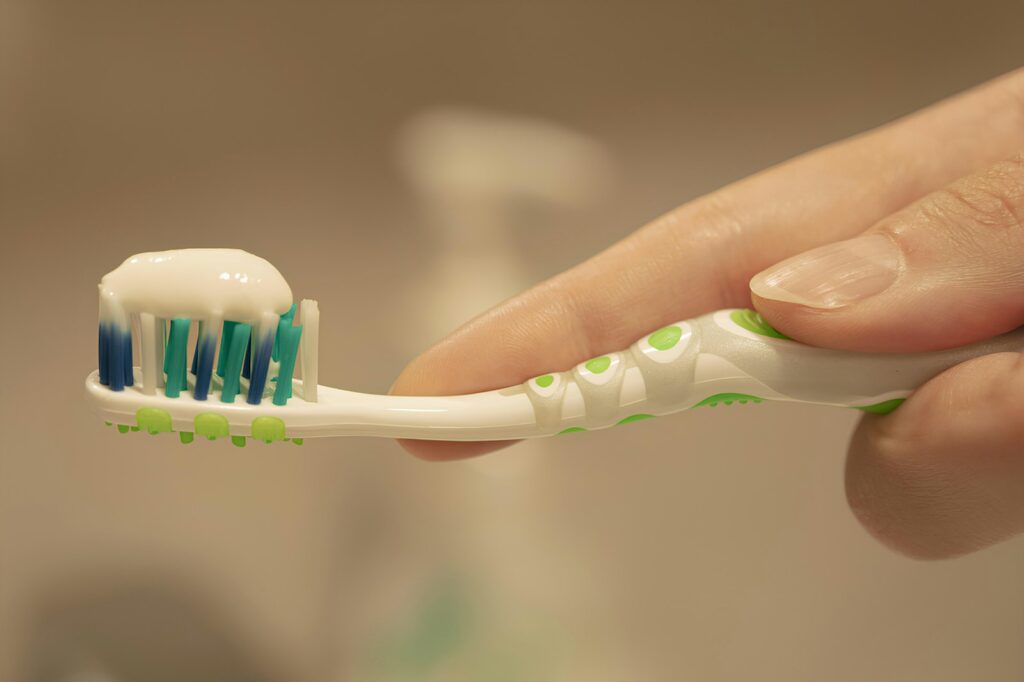
Walk down the toothpaste aisle at any Indianapolis Target or Kroger and you’ll notice more tubes labeled “fluoride-free.” Many of them use an ingredient called hydroxyapatite. With fluoride in the news and influencers promoting these products online, patients are asking us whether hydroxyapatite toothpaste is a smart switch. Here’s what you need to know.
What Is Hydroxyapatite Toothpaste?
Hydroxyapatite is a calcium phosphate mineral, and it’s the main building block of your tooth enamel. Hydroxyapatite toothpaste uses a man-made version of it, often in very tiny particles called nano-hydroxyapatite. The idea is that these particles fill in microscopic weak spots in enamel and help rebuild the surface. It has been used in Japan for decades and has become popular in the U.S. over the last few years.
How Does Fluoride Work?
Fluoride has been the standard in toothpaste since the 1950s for a simple reason: it works. It pulls calcium and phosphate back into enamel after acid attacks and makes teeth more resistant to future decay. Decades of research back it up, which is why dentists and the American Dental Association continue to recommend it.
Hydroxyapatite Toothpaste vs. Fluoride: What the Evidence Shows
Some smaller studies have found hydroxyapatite toothpaste performed about as well as fluoride for preventing cavities over a year or so, and there’s some evidence it can ease tooth sensitivity. However, the research is still young. In a recent NPR report, dental experts noted that the evidence is still limited and that fluoride remains the option with the most proof behind it.
In short, hydroxyapatite looks promising, but it hasn’t earned the same level of trust yet.
Who Might Consider It?
- People with sensitive teeth who haven’t found relief with other products
- Parents of young children who swallow toothpaste, after talking with their dentist
- Adults with a low cavity risk who strongly prefer a fluoride-free routine
On the other hand, if you get cavities often, have dry mouth, wear braces or have a lot of fillings and crowns, fluoride is usually the safer choice. In some cases we may even recommend a prescription-strength fluoride.
Can You Use Both?
Yes. Some patients brush with fluoride toothpaste and use a hydroxyapatite product for sensitive spots, or alternate between them. Talk with us first so we can match your routine to your cavity risk.
The Basics Matter Most
No toothpaste can make up for skipped brushing. Brush twice a day for two minutes, clean between your teeth daily and limit sugary snacks and drinks. Not sure your brush is up to the job? Read our comparison of manual vs. electric toothbrushes. And if cold drinks make you wince, see our tips on cold-weather tooth sensitivity.
Get Advice Made for Your Mouth
At your next cleaning, ask us about hydroxyapatite toothpaste. We’ll check for early weak spots with our cavity detection tools and recommend what fits you. Tenth Street Family Dental is at 6919 E. 10th Street, open weekdays plus Saturdays from 9 to 2. Call (317) 358-8885 or book online.